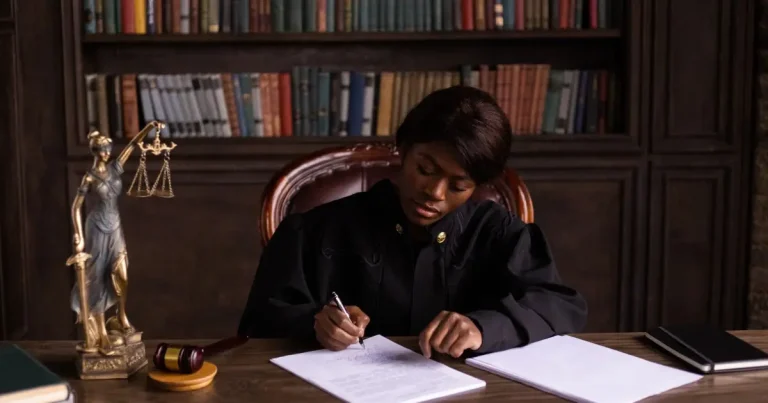
Take two hypothetical applicants. The first is a 23-year-old with a high school diploma, two years of retail loss-prevention work and no police background. The second is a 52-year-old who just retired after 25 years as a city patrol officer. Both want to work in a courthouse. Both search “court security jobs” and get the same page of results. Yet they are aiming at almost completely different doors, and the hiring rules behind each door have little in common.
The younger applicant is a natural fit for a state court officer trainee exam or an entry-level building security post with a county. The retired officer is the kind of candidate federal courthouse security contractors look for, because those jobs usually demand prior law enforcement experience. Knowing which door you are standing in front of saves months of wasted applications.
In short
Courthouse and government building security is staffed by at least three different employers: state court systems (court officers), county sheriffs (bailiffs and courtroom deputies), and private contractors working for federal agencies (court security officers and protective security officers). State court officer titles are civil service jobs filled from exam lists and often accept candidates with no police experience. Sheriff’s bailiff roles usually require state peace officer certification or a path to it. Federal courthouse screening jobs are mostly contractor positions that expect years of verified law enforcement work. Pick the track that matches your background, then apply through that employer’s own portal.
State court officers: the exam-list route
Large state court systems run their own uniformed security forces. New York is the clearest example. The New York State Unified Court System hires through a statewide Court Officer-Trainee exam, and appointments are made only from the eligible list the exam produces. According to the NY Courts court security careers page, the trainee title is the entry point, and trainees who complete two years of service move up to Court Officer. The exam announcements list the minimum requirements, which include U.S. citizenship and a high school diploma or equivalent, along with medical, psychological, physical fitness and background screening after the written test.
What the work involves: screening the public at entrances, maintaining order in courtrooms, escorting people in custody, protecting judges and jurors, and responding to disturbances. Court officers in New York are peace officers, so the job comes with academy training after appointment.
The catch is timing. Exams open on a schedule, not on demand, and results can take most of a year. If you miss the filing window, you wait for the next exam. Signing up for exam notifications on the court system’s site is the single most useful step.
Sheriff’s bailiffs and courtroom deputies
In many states, county courtrooms are secured by the sheriff’s office rather than by the court itself. The titles vary: bailiff, court services deputy, detention deputy assigned to court, or courtroom security officer. Some counties hire sworn deputies who must hold or obtain state peace officer certification. Others use non-sworn security staff for screening and a smaller number of sworn deputies for the courtroom.
These jobs are posted on the county’s HR site, not on a statewide board. Expect a written test, a physical ability test, an oral board, a polygraph in some agencies, and a full background investigation. Our guide to background checks for government jobs covers what investigators usually look at, and the city and county jobs guide explains how to find each county’s application portal.
Federal courthouses: contractor CSO jobs
This is the part most applicants misunderstand. The people who screen you at the entrance of a federal courthouse are usually not federal employees. The U.S. Marshals Service explains that Court Security Officers are employed by private security companies that hold Marshals Service contracts, and its judicial security fact sheet describes the division managing contracts for more than 5,000 of these officers. A 2018 Department of Justice Inspector General audit adds that CSOs are deputized as special deputy U.S. marshals, carry firearms and can make arrests while on duty.
Because of that authority, contractor postings typically ask for:
- A minimum age, commonly 21, as stated in contractor job ads
- Several years of verifiable law enforcement or military police experience; three years is a common figure in postings
- U.S. citizenship and a clean background, including a credit review in some contracts
- A medical exam, drug screen and firearms qualification
Requirements differ by contract and by company, so read each posting rather than relying on a general list. Contracts are organized by federal judicial circuit, which means the company hiring in one region may be different from the one hiring two states away. Search the contractor’s own careers page for “court security officer” plus the city.
Other federal buildings
Federal office buildings that are not courthouses are often protected by contract guards working under the Federal Protective Service, usually called protective security officers. These are also private-sector jobs, with requirements set by the contract. Separately, some agencies hire their own federal police officers, and those jobs do appear on USAJOBS with standard federal requirements.
Quick comparison of the three tracks
| Track | Employer | Prior police experience | Where to apply |
|---|---|---|---|
| State court officer | State court system | Usually not required | Court system careers site, exam announcements |
| Bailiff or court deputy | County sheriff | Often requires certification or academy | County HR portal |
| Federal courthouse CSO | Private contractor for USMS | Typically several years required | Contractor’s careers page |
| Building security guard | City, county or contractor | Varies; state guard license may be required | Employer site or state guard licensing board |
A note on pay and scams
Pay depends heavily on the employer and the region, and contractor wages are set by each contract, so we are not quoting a single national figure. State court systems publish salary grades on their exam announcements; check the current announcement rather than an old forum post.
Vagas Online is an independent guide and is not affiliated with any court system, sheriff’s office, the U.S. Marshals Service or any security contractor. Real employers never charge you to apply, to take an exam on your behalf, or to pay for training or uniforms up front. If someone asks for a fee to “reserve” a courthouse security spot, walk away.
Common questions
Can I become a federal court security officer with no police background?
Generally not. Contractor postings for USMS courthouse work usually require years of law enforcement or military police experience because CSOs are deputized and armed. Building screening jobs at non-court federal sites can have lower entry requirements, depending on the contract.
Is a bailiff the same as a court officer?
The duties overlap, but the employer often differs. A court officer is typically a court system employee; a bailiff is frequently a sheriff’s deputy assigned to court. The title tells you whose HR portal to watch.
Do I need a security guard license?
For private contractor jobs, many states require a guard license issued by a state licensing board. Sworn government positions use peace officer certification instead. Check your state’s licensing agency before applying to contractor jobs.
How long does the court officer exam process take?
It can stretch past a year from filing to appointment, since lists must be established before anyone is hired and background checks follow. Apply to other jobs in the meantime.
Putting it into practice
Start by sorting yourself honestly. If you have no police experience, focus on state court officer exams and county non-sworn security roles, and sign up for exam alerts today. If you have law enforcement years behind you, look at contractor CSO postings in your federal circuit and at sheriff’s court divisions, where your certification may transfer. Either way, gather your work history, addresses for the last ten years and references now, because every one of these tracks ends in a detailed background investigation.